Archive for the ‘Uncategorized’ Category

Bring Good Fortune to Your Outdoor Space with this Large Garden Buddha

Monday, April 5th, 2010
Large Gaden Buddha

Large Gaden Buddha

Now that the spring weather is finally here, it’s time to create that meditative space in your garden where you can soak up the sun and feel at peace with the world.  This tranquil spot will not be complete without the iconic beauty of a Garden Buddha.

Before the Buddha became a common fixture in the Asian garden, it had long been a symbol of mythology and good fortune.  Hindu gods like Krishna, Ganesh, Vishnu and Buddha have given people of the Hindu and Buddhist faith a tangible deity for worship, while bringing to mind the cultural heritage of the stories they tell.  Ever since the 8th century, when the Pala and Chola empires arose in India, bronze statues have played a major role in shaping the beliefs of Hindu worshippers.  Today, they are used as inspiration for people to develop the inner qualities that bring happiness, satisfaction and good fortune.

This masterfully designed Garden Buddha is seated with hands folded into a mystic triangle, which is symbolic of the fire that consumes all impurities.  It also represents the three “jewels” of Buddhism, which are the Good Law, the Sangha, and the Buddha himself.  By keeping this Buddha in your garden, you will continually be inspired to achieve your full potential in life, which will help you develop the qualities that bring your dreams to fruition.

This Garden Buddha is cast from a high-quality, weather-resistant aluminum alloy and coated with a patina-like finish.  Measuring 16” wide and 21.5” tall, the bottom has a soft protective covering that will keep it from damaging tabletops.  Whether you get a Large Garden Buddha for yourself or as a special gift for someone else, it is certain to become a conversation piece.

Stretch out on the floor with a Tatami Zaisu Chair

Thursday, March 25th, 2010

tatami zaisu chair

If you visit a Japanese home, you may be surprised at the low profile of their home décor.  This is because much of Japanese life is lived on the floor, whether in meditative spaces like Tatami rooms or seated on a Tatami Zaisu Chair.  This unique Japanese chair looks a lot like other chairs, but with one exception – it has no legs.

Why would someone want a chair with no legs?  Well, when you consider how many traditions of Asian culture involve sitting on the floor, it makes perfect sense to have a chair that offers back support and padding.  The traditional Japanese sitting style, known as the “seiza” style, involves sitting with all body weight atop the lower legs, which are folded beneath the body.  But this position can become uncomfortable after awhile, which is why so many people prefer the option of a zaisu chair.  This way, the legs can extend out in front of the body while the back is fully supported.

This particular Tatami Zaisu Chair is made from solid Asian hardwood, with a backrest that is curved for optimum support and comfort.  Made of tatami, the seat cushion is removable, and the back rest has a fan shaped cut-out pattern that makes it easy to carry from room to room.  With a seat measuring 18” x 18”, and a backrest 16” x 16”, these chairs are extremely comfortable and can easily be folded for storage.

Consider getting a few of these Japanese Tatami chairs for informal gatherings and for sitting at low-tables while playing cards, dining or watching television.

Welcome Spring with this Torii Japanese Garden Gong

Thursday, March 18th, 2010
Torii Garden Gong

Torii Garden Gong

Just in time for the start of spring, this Torii Japanese Garden Gong will infuse your Japanese garden with the graceful shape of the Torii of Itsukushima Shrine.  Long a revered symbol of Japan, the Shrine incorporates the graceful lines of calligraphy with the robust structure of a traditional Asian gateway, only it is designed to welcome departed spirits as come across the Inland Sea.

Fully visible only at low tide – when visitors can approach the gates on foot – the gate appears to float on the water during high tides.   The dramatic Torii (gate) of the Itsukushima Shrine is such a popular tourist attraction in Japan that the view of the gate from Mount Misen is known to be one of the three best views of Japan.  The gate itself is made from camphor wood and dates back to 1875, but the first gate was built in 1168.

In your garden, this Itsukushima Shrine replica will be more than a conversation piece; it will also make a beautiful sound.  When it is time to relax amid the blossoms of your garden, nothing will transform your spirit more than the rich resonance of a Japanese gong.

So important are gongs in Asian culture that they have been used to deter invasions, heal the sick, chase away evil spirits, and even invoke the spirits of the deceased.  With such a colorful history, it is no wonder that today the garden gong is said to add a sacred aspect to an outdoor setting.  Why not bring the ancient splendor of the Far East into your home and by adding this transformative gong to your garden this spring?

This Torii Japanese Garden Gong is made from walnut-finished ash wood with a black steel frame and a hand-hammered bronze gong that is 20” in diameter.  It measure 43” tall and is 37” wide.  A mallet is included.

Rikyu Japanese Tea Pot will help you celebrate the “Way of Tea”

Friday, March 12th, 2010

If you have ever wondered why the Japanese place so much importance on their formal tea ceremonies; or why their teapots look so much different than Western varieties, then learning about Sen no Rikyu, the “master of tea” himself, might fill in some of the blanks.  Rikyu’s memory is celebrated here in this beautifully crafted RIKYU Cast Iron Tea Pot.

RIKYU Cast Iron Tea Pot

Thanks to the 1989 movie, Rikyu, about the life of Sen no Rikyu during Feudal Japan, the world has gained more appreciation for Rikyu’s idealistic pursuit of aesthetic perfection in tea.  Because of this film, Rikyu has become a classic symbol for the “art of tea”.

The infamous Japanese tea ceremony, also known as the “Way of Tea” is a celebrated cultural tradition throughout Japan, which involves the ceremonial preparation of powdered green tea (chanoyu), all choreographed in something known as the “temae”.  The whole ceremonious presentation of tea in Japan places emphasis on the artful deliberation that characterizes Zen Buddhism.

This RIKYU cast iron Japanese teapot is a replica of the first ones used in Japan, when tea was still made over an open fire.  Many were designed to be hung over a hearth as a source of heat and humidity during winter months.  Hand-crafted in green cast iron with a bamboo pattern on the lid, this striking tea pot holds up to 45 fluid ounces, is 4” tall, and comes with a removable strainer inside.  It makes a unique addition to your kitchen or a wonderful gift!

Decorate your Space with this Great Wave Noren

Wednesday, March 3rd, 2010
Great Wave Noren Wall Hanging

Great Wave Noren Wall Hanging

Looking for a textural wall hanging or room divider which is also a beautiful work of art? Then you may want to consider this Great Wave Noren.  A Noren is a traditional Japanese fabric divider, which can be hung on doors, between rooms, or in windows.  To make them more fluid, and passable, Noren usually have long vertical slits right down the middle.  They are rectangular in shape and come in a variety of sizes, colors and patterns.

Outside of the home, Noren can be found in restaurants and shops as a wind protector or sun shade, and are also used to display advertising.  They are also found in commercial bathhouses, known as Sentō, where they are colored blue for men and red for women.

One way to celebrate this long-held Japanese tradition in your home is with this Noren depicting Hokusai’s famous painting, “The Great Wave at Kanagawa”; an iconic frozen image of a great wave eclipsing Mount Fuji in the distance.  While many viewers know this work of art by the “Great Wave” in the foreground, Mount Fuji has always been the focus of this inverted composition.

Fans of Hokusai’s woodblock prints have often looked at this image and assumed it to be a tsunami, but the wave is more likely to be an oversized “okinami”, which is the Japanese word for “ocean wave”.  To fully appreciate the artist behind this famous print is to understand that Hokusai was a thoroughly obsessed Bohemian artist who was a singled-minded artistic genius.  Later in life he signed one of his final works “The Art-Crazy Old Man”.  Perhaps his eccentricity is what drove him to change his name about 30 times and live in some ninety different homes during his 89 years.  Hokusai left over 30,000 works of art, including woodblock prints, silk paintings, sketches and picture books.

This magnificent Noren is an excellent way to decorate and furnish your home in Zen fashion and it will enhance any room or doorway.  Made from cotton canvas, the Great Wave Noren shown here measures 33” by 59”.  Its closed-top seam allows it to be hung with a wooden dowel or bamboo rod.

Slip into something more comfortable with this Blue Carp Koi Yukata Robe!

Monday, February 22nd, 2010
Blue Koi Yukata Robe

Blue Koi Yukata Robe

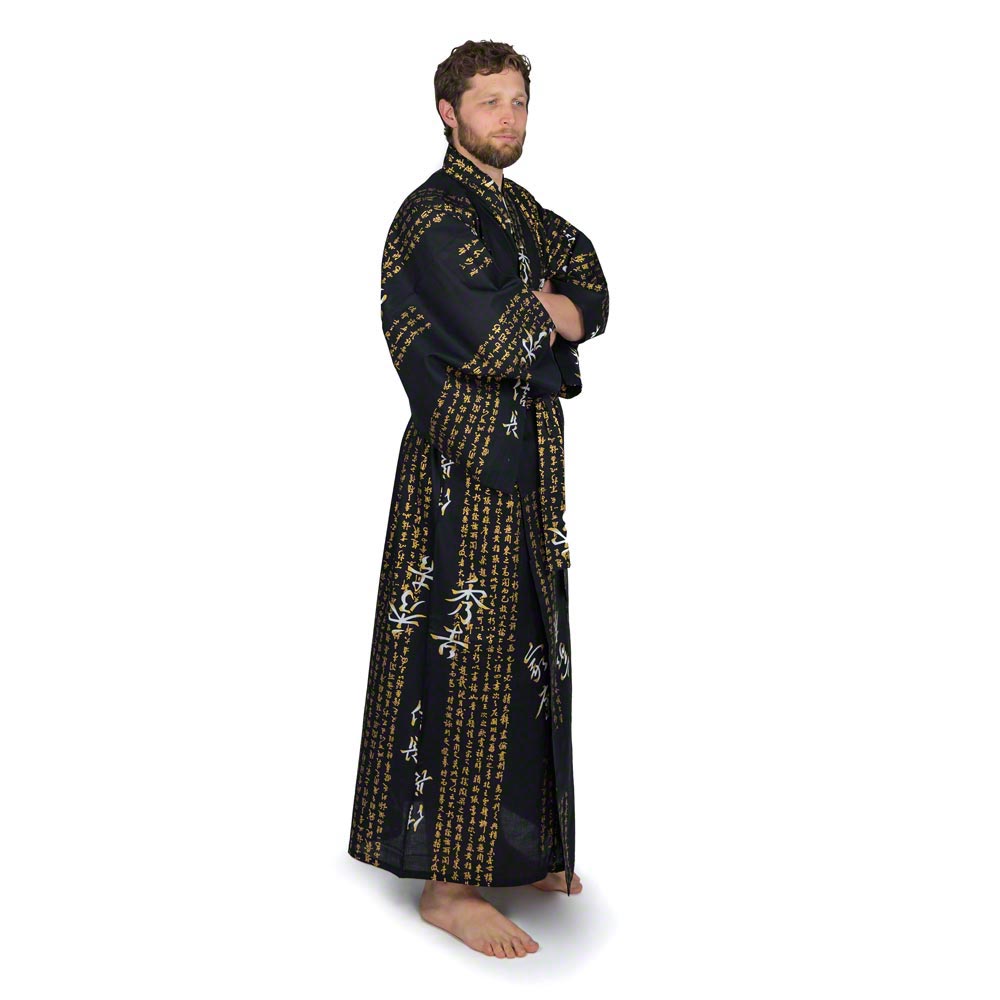
Transform your downtime with this sumptuous Blue Carp Koi Yukata Robe.  A lighter-weight cotton version of a traditional Japanese kimono, the Yukata is still widely used in Japan.  These summer kimonos are worn by both men and women, but linen “yukatabira” were originally draped around court noblemen after bathing.  They didn’t gain popularity with the general public until people started wearing them in Japanese public bathhouses.  Today, they are worn quite regularly at Japanese festivals and ryokan, or simply as loungewear.

This Blue Carp Koi Yukata is emblazoned with a legendary symbol of perseverance and strength.  According to Japanese legend, a koi fish will generally swim upstream until it reaches the final waterfall, where it vaults itself into the mists and emerges as a water dragon.  This is how the koi became emblematic of purposeful determination in the face of adversity, and today it still stands for superior courage.

Also known as a wild carp, many Japanese families keep koi in a garden pond at their home to bring them good fortune or luck.   As a result, koi enjoy an elevated status throughout Asia and have become a popular theme for tattoos.  It is the koi’s association with worldly aspiration and advancement that make them such a highly regarded symbol of success.  Some koi are bred for their spectacular colors, which range from silver and gold to orange, black, yellow and even calico, making them appear like swimming jewels.

Celebrate the beauty and magic of the legendary koi with this Blue Carp Koi Yukata Robe.  Its navy blue and white pattern makes an elegant statement in crisp 100% cotton.  Made in Japan, this robe is available in three sizes (XL, XXL and XXXL) and includes a matching belt.
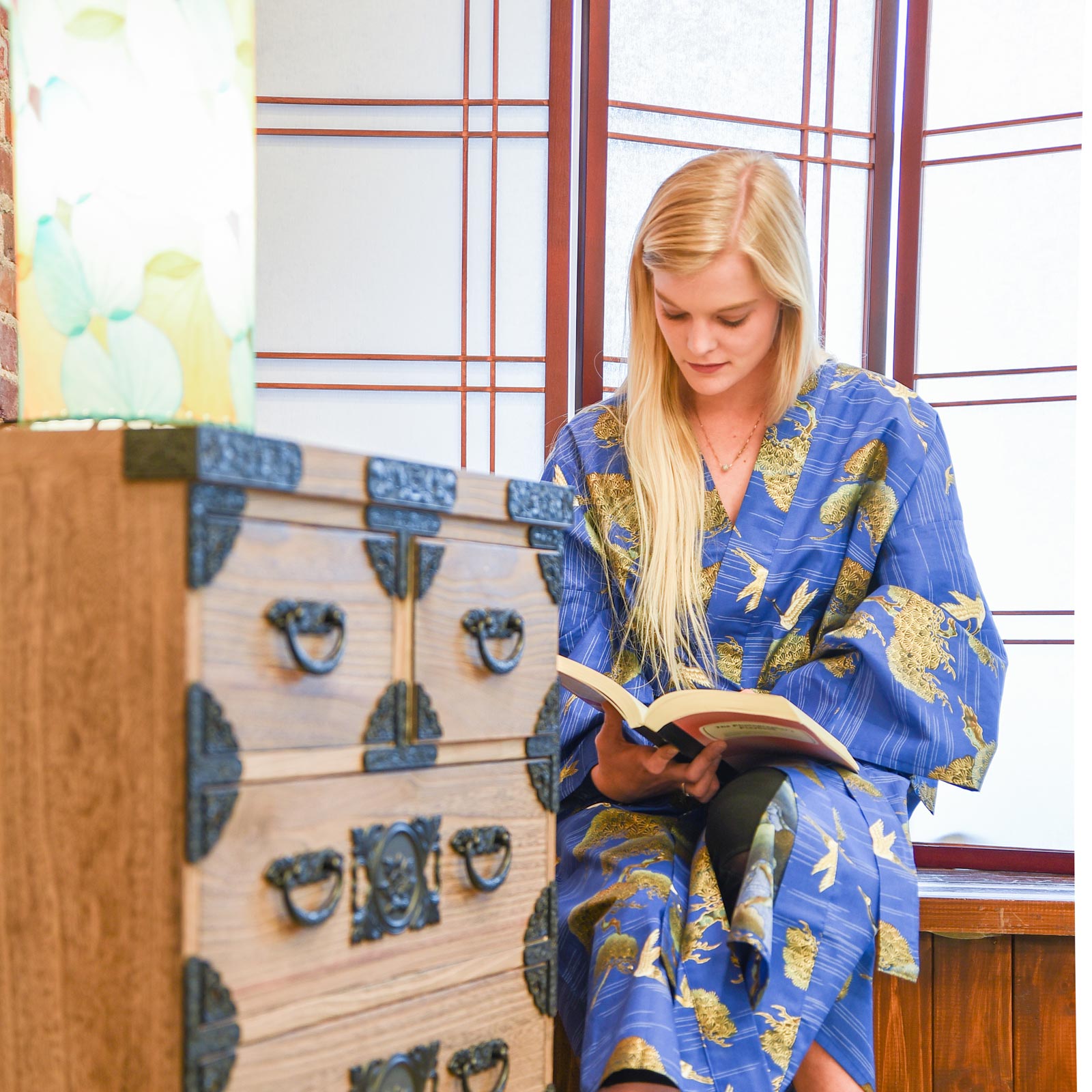
Ikebana Lotus Flower Vase Evokes Thoughts of Spring!

Monday, February 15th, 2010

If you are tired of winter and need a quick dose of spring fever, consider the Japanese art of Ikebana.  Like so many Asian arts, Ikebana brings together the spirituality of nature and humanity with graceful strokes.  Even if you are not interested in flower arranging, just the unfolding form of this Ikebana Lotus Flower vase will add a flourish of flora to your home environment.

This beautiful Ikebana vase evokes the blooms of a lotus flower, and is available in blended shades of Hamada Purple, Blue, Purple and Red.  Each of these unique hand-crafted vases has a kenzan frong, which holds the stems, keeping them beautiful and fresh for up to three weeks.  Remember, Ikebana literally means “flowers kept alive”.

Before you think of Ikebana as a simple method of flower arrangement, remember the Japanese tend to make every art into a highly disciplined skill.  Instead of focusing only on the blooms of the flowers, Ikebana emphasizes the whole plant by drawing attention to the shape, form and line of everything from the blooms to the stems and leaves.  While it is a form of creative self expression, Ikebana also has some rules.  First of all, every part of it must be organic, including grasses, flowers, branches and leaves.  The individual creations of Ikebana artists show how much more elaborate and imaginative an arrangement of flowers can be.

As each porcelain vase is hand-crafted, no two are exactly alike, so why not create a unique statement by creating one for every Japanese decorated room in your house?  The Ikebana Lotus Flower vase measures 3″ at the base, 6″ at the top and is 3 1/2″ in height. What a great way to kick off spring!

The Pipedream Chime Helps You Discover the Music Within

Monday, February 8th, 2010
Pipedream Dream

Pipedream Dream

This is one “pipe dream” that is not too fantastic or illusory to achieve.  Just the opposite is true.  This is a product that inspires hope and puts the mind at ease.  Enchant your spirit and mind with the sparkling notes of this beautiful Pipedream Chime.  Its winning design is just as beautiful to look at as it is to play.

Conjure up an image in your mind of the Javanese coast in the South Pacific; tall palms sway in the warm breeze, the sun edges closer to the horizon, and you are at rest in the spirit of the moment.  An improvisation begins with a group of Javanese musicians near the water’s edge, and you hear sounds that transport you to another dimension.  If you want to recreate the ambiance of the volcanic South Pacific – wherever you are – the Pipedream Java is a dream come true.

The Pipedream Chime is made from precision-tuned tubes that are tuned to the pentatonic scale, so it produces an incredible sound no matter which notes are chimed.  Even if you are not musically inclined, you can create your own beautiful music, making them a perfect instrument for musical self-discovery!

Made with precision-tuned tubes that are tuned to the same musical scale as the Javanese ensemble “gamelan degung”, this splendid chime is made in either a black or cherry-finished ash wood, with eight silver tubes and two mallets.  It measures 20” long and 12” wide, and makes a beautiful chime addition to your Zen home environment.

Get closer to nature with Andonia’s Nature’s Peace Pendant

Monday, February 1st, 2010
Nature's Peace Pendant

Nature's Peace Pendant

It is rare to find a truly unique piece of Zen jewelry that doesn’t cost a fortune.  That’s why this limited edition “eco-friendly” glass pendant is such a popular item.  Individually designed and hand-crafted by artisans, this Nature’s Peace Pendant is made from 100% recycled glass, which is fused together with an exquisite nature photo. This revolutionary process ensures that the photo becomes part of the glass itself, and the sterling silver bail just adds to the pendant’s mystique.  What makes these pendants a real “find” is their limited number.  The artist only makes 200 pieces of each design, and they sign and number each piece.

If you know someone who is truly unique and beautiful, inside and out, then why not give them something as special as they are?  Or maybe you want to wear a piece of jewelry that truly expresses your outlook on life.  The Tibetan symbolism used in this piece is a subtle reminder that no matter how ordinary things may appear, all things in life are precious.  Wearing a symbol inspired by Zen will encourage you to live fully in the present moment, no matter how mundane it may seem.

Unlike many other pieces of Tibetan-themed Andonia jewelry, the Nature’s Peace pendant doesn’t use traditional symbols like bamboo, cherry blossoms and lotus flowers.  Instead it is inspired by the beauty of nature that surrounds us, yet often goes unnoticed.  Its translucency creates an interplay of light that produces an extraordinary luminosity that changes with motion.  The unique  beauty of Andonia is known around the world as the epitome of Zen-inspired jewelry.

This pendant measures 1” x 1” and hangs on a supple, multi-strand cord that 17” long.

Dragon Tingsha Meditation Cymbals Clear the Mind

Monday, January 25th, 2010

Dragon Tingsha Meditation Cymbals

When the two pieces of this Drgaon Tingsha Meditation Cymbal strike each other, they signal the mind and body to relax.  This Hindu and Buddhist tradition started out when Tingsha and Cymbal instruments were used in chanting, ceremonies, and ritual offerings.  Today’s Tingsha cymbals are used to clear the mind at the beginning of a timed meditation session, and they are rung again to signal the end of a session.

In Asian culture, the dragon symbol is strongly associated with the healing qualities of water, as these creatures are known for being the rulers of rivers, seas and waterfalls.  Japanese artists often depict the dragon revealing itself during tornados and twisters on the water.

The traditional Tingsha gong has been used for centuries in Buddhist rituals.  Because the metal disks each have a slightly different pitch, the combined effect when they strike each other has a very unique, reverberating sound.  Outside of the Buddhist traditions, Tingsha cymbals have been used to clear a space of negative energies and for healing purposes.

Most Tingsha gongs are made of an iron alloy, which has a wonderful tonal quality, but the early gongs also included meteorite material. Casting of the metal often includes decorative symbols like dragons and one of the eight auspicious symbols, as well as imprinted Tibetan characters.

These Dragon Tingsha Meditation Cymbals are cast from a heavyweight metal and have an intricate dragon pattern imprinted on each side.  Measuring 3” in diameter, these distinctive cymbals are strung together on a leather thong.