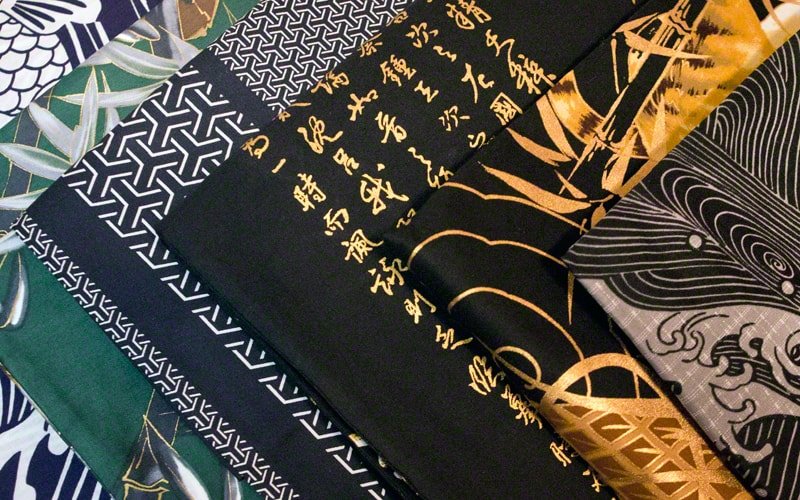
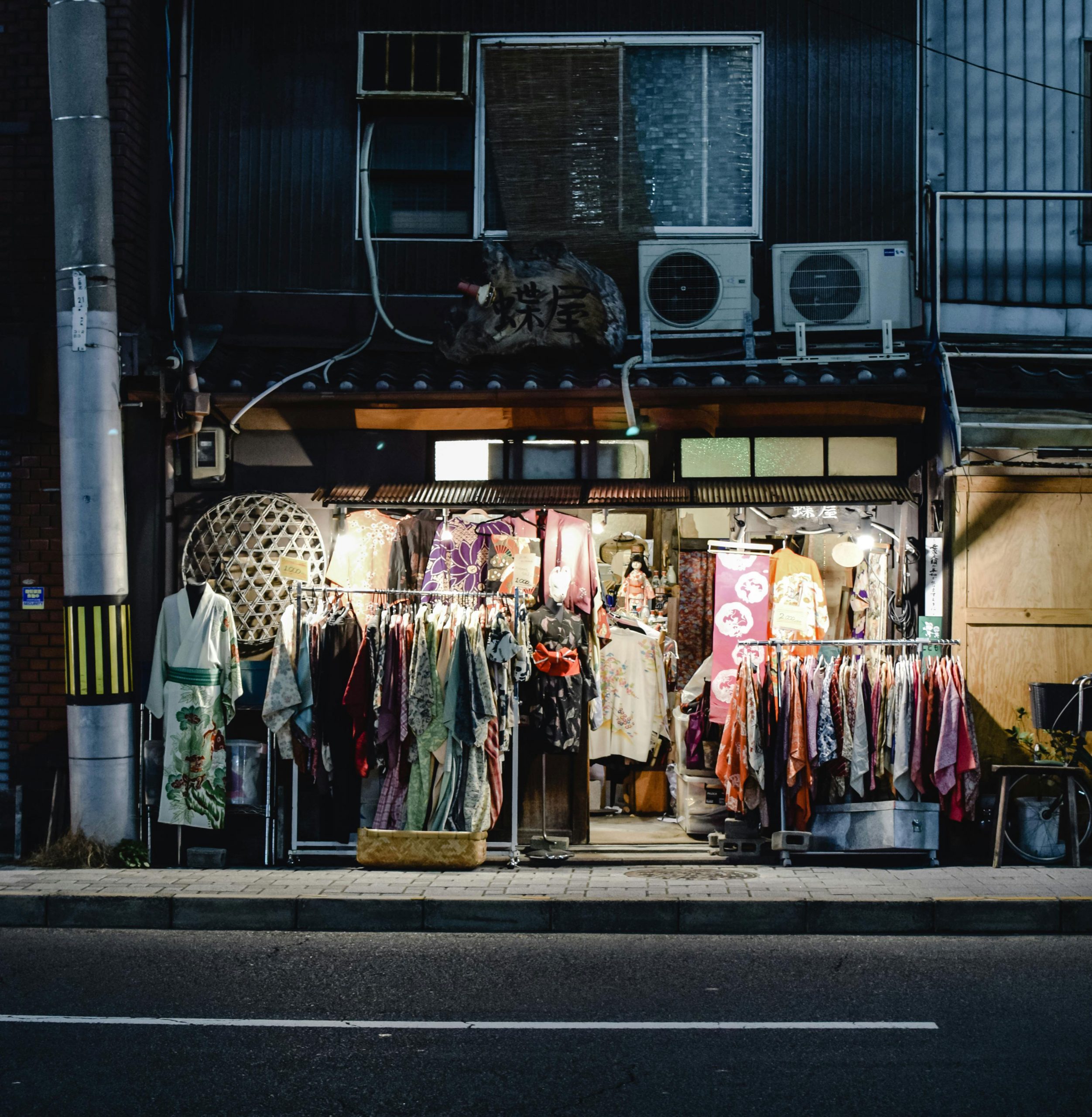
The term “vintage” carries different meanings depending on the context. For some, it evokes the memory of a fine wine, carefully noting the year it was produced. Others might think of a classic car their grandfather cherished or an antique treasure discovered at a garage sale. In the world of kimonos, however, “vintage” typically refers to pre-owned kimonos and yukata robes.
In recent years, the market for “vintage” clothing has grown significantly, with many dealers specializing in these unique garments. Often, the term “vintage” is used more as a marketing tool than a precise descriptor. After all, “vintage” sounds far more appealing than “used,” much like how car dealerships prefer the term “pre-owned.”
But why do people gravitate toward pre-owned clothing? For some, it’s about finding a bargain. Others are drawn to the charm of a one-of-a-kind piece that adds character to their wardrobe. And then there are the true enthusiasts—those who scour resale shops or online marketplaces in search of that perfect, storied garment.
Do We Sell Vintage Kimonos?
Occasionally, we receive inquiries about vintage kimonos—whether we sell them or are interested in buying them. The short answer is no; we do not. At Chopa, we focus exclusively on offering new Japanese robes, with nearly 100 styles of kimono and yukata for men, women, and kids available in our online store,
www.chopa.com.
What Defines a Vintage Kimono?
The definition of a “vintage” kimono is surprisingly elusive. Does it mean the kimono was made in a particularly “good” year, like a fine wine? Does it need to be 20 years old to qualify, or is three years enough? Is “vintage” simply a more elegant way of saying “old”?
Our exploration of the vintage kimono market revealed a lack of clear standards in a fragmented arena. The term seems to be applied arbitrarily, with little consistency. A used kimono might be found at a garage sale, but often, there is no reliable backstory. Sellers are frequently vague, offering explanations like, “It was a gift from a family member” or “Someone brought it back from Japan years ago, and it’s been in storage ever since.”
The Vintage Kimono Market
Like many industries, the vintage kimono market includes both wholesalers and retailers. Wholesalers often purchase kimonos in bulk—sometimes by the pallet—through auctions or sight-unseen deals. These bundles are then sorted and graded. The best pieces are selected for resale, while those in average condition may be passed along to other dealers. Kimonos in poor condition are often repurposed, with their fabric used for art, design, or crafting projects like quilts or reconstructed garments.
When shopping for vintage kimonos, you will often encounter grading systems. However, these are highly subjective and vary widely between sellers. Grading might range from “A to AA” or “Good to Very Good,” but the criteria are rarely standardized. For example, one seller might describe a “Condition C” kimono as “well-used with clear signs of wear and staining, suitable for casual or decorative purposes.” Another might label a robe as “Top Grade” with vague descriptions like “fabric is in great condition” or “patterns are wonderful.”
If you are shopping by grade, it is essential to do your homework. Ask questions about the seller’s expertise: How long have they been in business? Do they have experience in Japan or the kimono industry? What criteria do they use for grading?
What to Consider When Buying Vintage Kimonos
When purchasing a vintage kimono, there are several factors to keep in mind:
- Condition and Cleanliness: Ads often mention flaws like “light staining” or “some spotting.” Do not hesitate to ask for details—what caused the stains, and how was the kimono cleaned? With heightened awareness of infectious diseases, including COVID-19, it’s wise to exercise caution.
- Storage Conditions: Inquire about how the kimono was stored. Was it kept in a climate-controlled environment, or was it exposed to high humidity and heat in an old warehouse? Musty or moldy odors can be a red flag, especially for those with respiratory concerns.
- Authenticity and Story: Some vintage kimonos come with fascinating histories, while others may lack any provenance. If the story behind the garment matters to you, be prepared to ask questions and verify details.
Is a Vintage Kimono Right for You?
Ultimately, the decision to purchase a vintage kimono is a personal one. The market is filled with beautiful, unique pieces, each with its own charm and potential story. However, as with any form of art or collectible, it is important to research, investigate, and approach each purchase with care.
Whether you are a seasoned collector or a first-time buyer, the world of vintage kimonos offers a treasure trove of possibilities. Happy shopping, and may you find the perfect piece to add to your collection!
Kimono Market in Japan
Tags: kimono shopping, loungewear, Women's kimono, Yukata vs Kimono, yukatas
This entry was posted
on Tuesday, February 24th, 2026 at 10:50 am and is filed under Clothing, Costumes, Japanese kimono, Kimono, loungewear.
You can follow any responses to this entry through the RSS 2.0 feed.
Both comments and pings are currently closed.